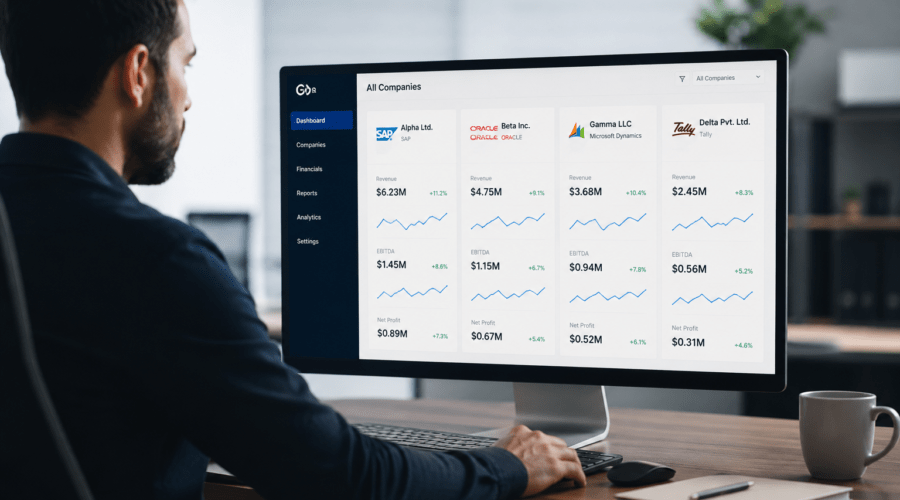
For growing enterprises, managing financial performance becomes increasingly complex as new business units, subsidiaries, and acquisitions are added to the organization. One company may operate on SAP, another on Microsoft Dynamics, while a third relies on NetSuite or another ERP platform. While each system serves its purpose, finance teams often face a common challenge: obtaining a unified...
For years, businesses relied on spreadsheets, historical reports, and manual analysis to make predictions. While these traditional methods provided a starting point, they often struggled to keep pace with rapidly changing markets, shifting customer behavior, and increasing volumes of data. Today, Artificial Intelligence is changing. AI-powered forecasting is helping organizations move beyond static predictions and toward...
Procurement teams are under constant pressure to reduce costs. In many organizations, savings are the key metric for measuring procurement success. And while cost reduction is essential, the truth is this: Aggressive cost-cutting can weaken long-term resilience. When procurement teams chase the lowest price, they often overlook the bigger risks, supplier dependency, quality issues, limited innovation,...