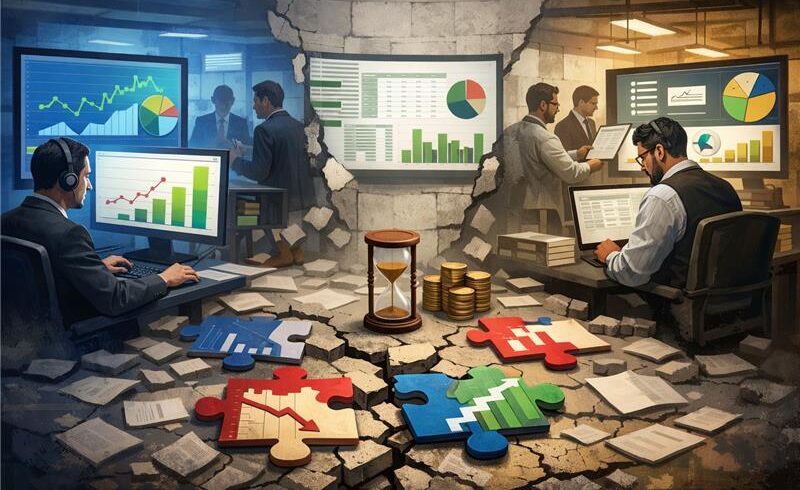
For most supply chain leaders, “visibility” has become one of those words everyone agrees is important but few organizations truly achieve.
On paper, the systems are in place. There’s an ERP, a warehouse system, a transportation platform, maybe a planning tool layered on top. Data exists everywhere. And yet, when a disruption hits or demand shifts unexpectedly, teams still scramble. Reports are pulled. Spreadsheets circulate. Meetings multiply. Decisions are delayed.
The challenge isn’t a lack of data.
It’s a lack of clarity.
This is where the conversation around supply chain visibility needs to change especially as supply chains grow more complex, more global, and more tightly tied to financial performance.
AI-powered supply chain visibility isn’t about seeing more information. It’s about seeing what matters, in real time, and understanding what’s likely to happen next.
Why Traditional Supply Chain Visibility Falls Short
For years, visibility was defined in fairly narrow terms. Leaders wanted to know where inventory sat, whether shipments were on time, and what production schedules looked like. These views were often siloed, owned by different teams, and updated periodically rather than continuously.
That approach worked until it didn’t.
Today’s supply chains are highly interconnected. A delay at a tier-two supplier can quietly ripple into production slowdowns, expedited freight costs, missed customer commitments, and margin erosion. When information arrives late or without context, teams end up reacting to symptoms rather than addressing root causes.
This is why many organizations despite heavy investment in technology still struggle with end-to-end visibility. Data exists, but it’s fragmented. Insights exist, but they arrive too late. Decisions often get made with partial information, and the financial impact shows up weeks later.
Industry studies consistently show that nearly 60% of organizations lack true end-to-end supply chain visibility. Not because they aren’t trying but because traditional tools weren’t designed for today’s pace and complexity.
What End-to-End Supply Chain Visibility Really Means
True supply chain visibility goes beyond tracking movement or monitoring status. It means understanding how decisions and disruptions propagate across the entire value chain.
It connects inventory, production, procurement, logistics, demand signals, and financial performance into a single, coherent view. More importantly, it shows how these elements influence one another.
When visibility works the way it should, leaders can answer questions like:
• If a supplier delay occurs, how does it impact production output, customer delivery dates, and revenue?
• Which SKUs are profitable on paper but risky in practice due to volatility or supply constraints?
• How will changes in demand affect inventory levels, cash flow, and margins over the next quarter?
This level of insight is difficult, if not impossible to achieve with static reports or disconnected systems. It requires a more dynamic, intelligent approach.
The Role of AI in Modern Supply Chain Visibility
Artificial intelligence doesn’t replace supply chain expertise. It enhances it.
At its core, AI brings three critical capabilities to visibility:
First, it unifies data across systems. AI-powered platforms can ingest information from ERP, operational systems, planning tools, and external sources, creating a single analytical layer without forcing teams to replace existing infrastructure.
Second, AI detects patterns and anomalies at scale. Humans are excellent at judgment and context, but no team can continuously analyze millions of data points across the supply chain. AI models can identify emerging risks, inconsistencies, and trends long before they become obvious problems.
Third, AI enables predictive insights. Instead of only explaining what has already happened, AI helps forecast what is likely to happen next; allowing leaders to act early rather than react late.
This shift from hindsight to foresight is what fundamentally changes how supply chains are managed.
Real-Time Tracking: From Status Updates to Situational Awareness
Real-time tracking is often misunderstood as simply knowing where things are. In reality, it’s about situational awareness.
Modern supply chains generate a constant stream of signals: inventory movements, production updates, supplier confirmations, shipment milestones, and demand changes. When these signals are captured and analyzed in real time, teams gain the ability to respond immediately rather than waiting for periodic reports.
More importantly, real-time visibility becomes exponentially more valuable when it’s connected to business outcomes. A late shipment isn’t just a logistics issue; it may affect customer service levels, production continuity, and financial performance. AI-powered visibility makes these relationships clear and actionable.
This is where many organizations experience a shift in mindset. Visibility stops being an operational metric and becomes a strategic advantage.
Predictive Insights: Anticipating Problems Before They Escalate
If real-time tracking tells you what’s happening now, predictive insights help you understand what’s coming next.
AI models analyze historical patterns alongside real-time data to forecast outcomes, including demand fluctuations, supplier performance risks, inventory shortages, and capacity constraints. These predictions aren’t static forecasts they update continuously as new data flows in.
For supply chain leaders, this changes the nature of decision-making. Instead of asking, “What went wrong last month?” the conversation shifts to, “What risks are emerging, and what actions will protect our margins and service levels?”
Predictive insights also support scenario planning. Leaders can explore “what-if” questions, test assumptions, and evaluate trade-offs before committing to a course of action. This ability to simulate outcomes builds confidence, especially in uncertain environments.
Business Impact: Why AI-Powered Visibility Matters
The value of AI-powered supply chain visibility isn’t theoretical. It shows up in measurable business outcomes.
Organizations with strong visibility make decisions faster because they spend less time reconciling data and more time acting on insights. Risks are identified earlier, giving teams time to intervene before disruptions escalate. Inventory levels are better balanced, reducing both stockouts and excess working capital.
Perhaps most importantly, visibility brings the financial dimension into focus. When operational events are linked directly to cost, margin, and cash flow impact, leaders gain a clearer understanding of how day-to-day decisions affect long-term performance.
This alignment between operations and finance is where visibility delivers its greatest value.
A Practical Example: AI Visibility in Automotive Manufacturing
Consider an automotive manufacturer managing thousands of components sourced from a global supplier network. Production schedules are tight, and even small disruptions could cascade into significant delays.
Before adopting AI-powered visibility, the organization relied on periodic updates from suppliers and internal reports that lagged behind reality. When issues surfaced, options were limited and often expensive.
With AI-driven visibility in place, supplier performance data, inventory levels, and production schedules were monitored continuously. Early warning signals flagged potential delays days in advance, giving planners time to adjust sourcing or production plans.
The result wasn’t perfection, but control. The organization reduced lead-time variability, lowered expedited shipping costs, and improved coordination across teams. Most importantly, leaders gained confidence in their decisions because they understood both operational and financial implications in real time.
Measuring What Matters: KPIs (Key Performance Indicators) for Visibility Success
Effective supply chain visibility should translate into clear performance improvements. Common indicators include forecast accuracy, inventory turnover, supplier reliability, order fulfillment rates, and working capital efficiency.
However, one of the most telling metrics is often overlooked: decision latency. How long does it take to identify an issue, understand its impact, and act?
AI-powered visibility dramatically shortens this cycle, enabling organizations to move at the speed their markets demand.
Overcoming Common Barriers
Many organizations hesitate to pursue AI-powered visibility because they worry about data quality, system complexity, or change management. These concerns are valid, but they’re also solvable.
Modern platforms are designed to work with imperfect data and integrate with existing systems rather than replace them. Adoption doesn’t require a “big bang” transformation; it can start with targeted use cases and expand over time.
The key is focusing on clarity and outcomes, not technology for its own sake.
How nava Ai Approaches Supply Chain Visibility
At nava Ai, supply chain visibility is approached as part of a broader decision-intelligence framework. The goal is not to generate more reports, but to help leaders understand what’s happening across operations and finance and what actions will drive better outcomes.
By unifying data across ERP and operational systems into a single analytics layer, nava Ai enables real-time and predictive insights that support faster, more confident decisions. The emphasis is on usability, relevance, and impact, ensuring that insights are not only accurate, but actionable.
Looking Ahead: The Future of Supply Chain Visibility
The future of supply chain management is not static dashboards or monthly reviews. It’s continuous, predictive, and deeply integrated with financial performance.
As volatility becomes the norm rather than the exception, organizations that invest in AI-powered visibility will be better equipped to adapt, compete, and grow. Those who don’t will find themselves reacting to events rather than shaping outcomes.
Supply chain visibility is no longer just an operational concern. It’s a strategic imperative.
Final Thoughts
AI-powered supply chain visibility represents a fundamental shift from managing by hindsight to leading with foresight.
For manufacturing and distribution leaders navigating complexity and uncertainty, this shift offers something invaluable: clarity. Clarity in operations. Clarity in financial impact. And clarity in decision-making.
That clarity is what turns visibility into an advantage.